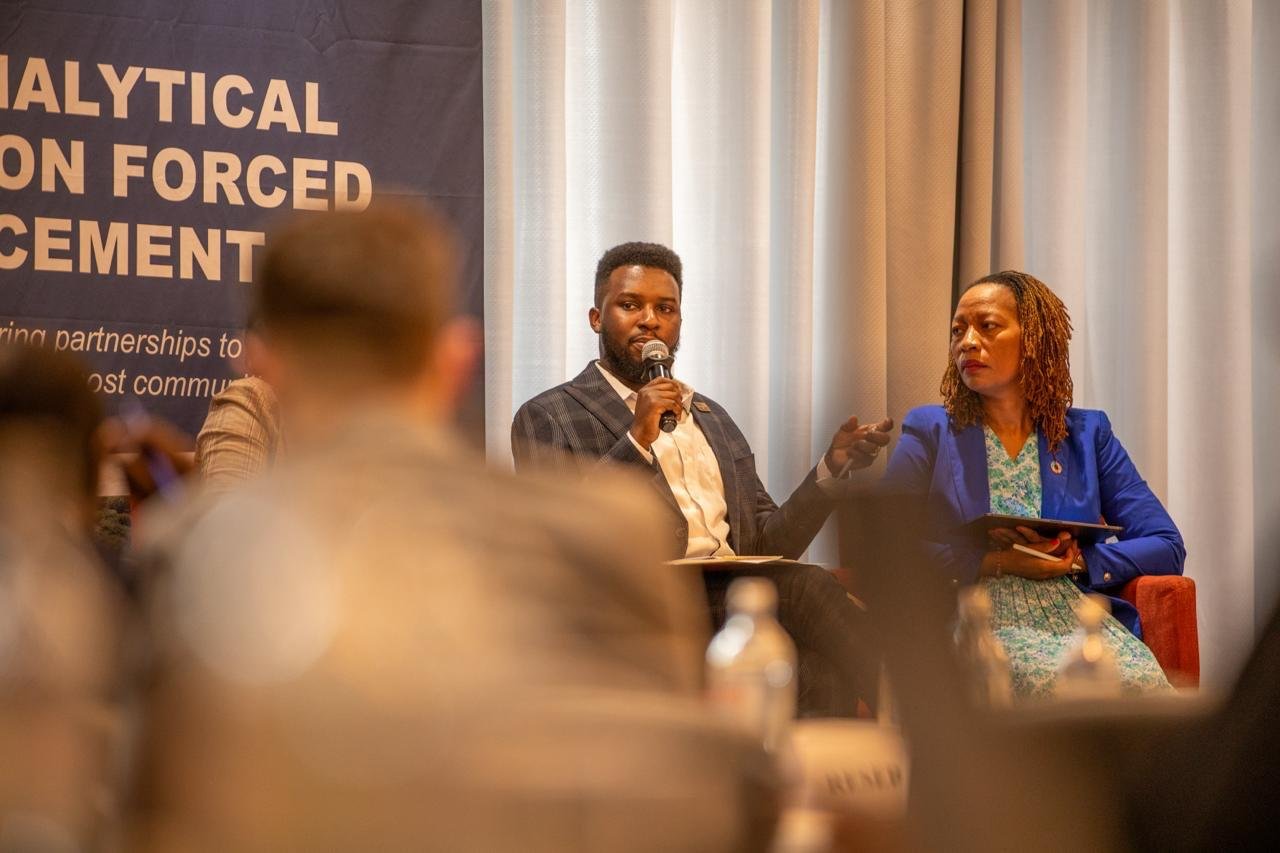
Being invited to a conversation is not the same as having a voice in it. I've been thinking about this distinction a great deal — sitting in rooms that were designed to discuss communities I come from, watching people who have never lived what we live make decisions about how we should live it.
The humanitarian sector has a language for this. They call it "participation." They speak of it in strategy documents and funding proposals. They create working groups and advisory committees. They invite a refugee to sit at the table. And then they proceed to run the meeting exactly as they had planned to run it before the invitation was extended.
"The question is not whether we are in the room. The question is whether the room changes because we are in it."
The Architecture of Exclusion
Meaningful participation is not simply about presence. It is about power — specifically, about who gets to shape the agenda, who is heard when they speak, and whose knowledge is treated as legitimate expertise versus lived experience to be processed and filed away.
In my years working in refugee advocacy across East Africa, I have watched organisations tick a box marked "community consultation" while the community's actual concerns were reduced to a single bullet point on slide fourteen of a presentation that had already been approved by the board.
This is not participation. This is theatre. And we — the communities being consulted — are the audience, not the cast.
"We are not asking to be saved. We are asking to be heard — and then trusted to act on what we know."— A colleague at Youth Voices Community, Nairobi, 2021
What Genuine Participation Requires
Real inclusion demands three things that most institutions are not yet willing to give: time, trust, and a redistribution of decision-making authority.
It requires time because communities need space to deliberate among themselves before they engage with external actors. It requires trust because the knowledge that refugees carry — about what works, what has failed, what is needed — must be treated as evidence, not anecdote. And it requires a genuine shift in who decides, not just who is present when others decide.
Refugee-led organisations must be at the table where funding decisions are made, not just the table where funding decisions are communicated.
Community knowledge must be integrated into programme design from the start, not appended as "local context" after the framework has been built.
Accountability must flow in both directions — not just from communities to institutions, but from institutions to communities.
The Stakes
This matters not as a matter of principle alone — though it matters deeply on principle — but because programmes designed without genuine community participation consistently fail to reach the people they claim to serve. The evidence on this is not contested.
When refugees are treated as passive recipients of humanitarian action rather than active agents in their own futures, we get programmes that are expensive, inefficient, and often harmful. When we are in the room — truly in the room — we get something closer to what is actually needed.
I have seen this with my own eyes. At Youth Voices Community, the programmes that worked were the ones we designed ourselves. Not the ones designed for us.
"Africa's collective consciousness — seeing refugees as brothers and sisters — offers one of the strongest pathways to genuine inclusion across the continent."
A Path Forward
The Refugees Seeking Equal Access at the Table (R-SEAT) framework exists precisely to institutionalise this shift — not as a nice-to-have add-on to existing systems, but as a structural requirement of how policy on forced displacement is made across the East Africa region.
We are working to ensure that state-level conversations about refugees include refugee voices not as guests, but as stakeholders with standing. This is slow, difficult, political work. But it is the only work that will produce systems worthy of the people they claim to serve.
The question is not whether we are in the room. The question is whether the room changes because we are in it. That is the only test of genuine participation that matters.